Manufacturing
Inside the Cutting Room: Fabric Inspection and Marker Planning
Why roll checks, fabric direction, usable width and size ratios matter before the first garment panel is cut.
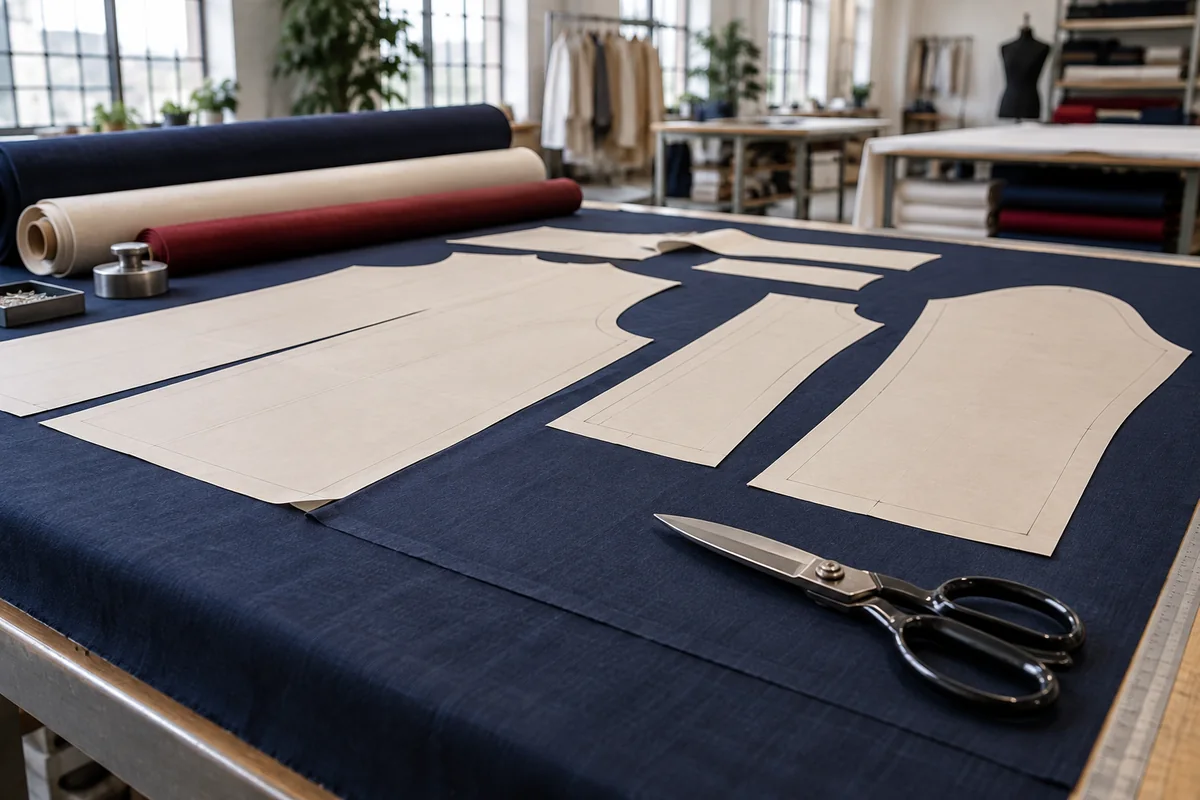
Cutting is a point of commitment in garment manufacturing. Fabric that could serve several possible layouts becomes a set of panels for particular styles and sizes. Errors at this stage can travel into sewing, while careful preparation gives the team a clearer path to a consistent garment. Buyers do not need to operate cutting equipment to understand the decisions involved. This guide explains the relationship between fabric inspection, marker planning and order accuracy, and the records worth discussing before production is released.
01
Begin with the identity of every roll
A roll should be connected to the material that was approved for the order. Ask how the team records the supplier reference, colour, lot or batch information, length and width. Those details make it possible to connect an observed problem to the material involved. Use a specific purchase reference instead of a general colour description.
Separate physical receipt from approval for cutting. Receiving the expected number of rolls does not establish that each one meets the agreed requirements. In a hypothetical polo order using several deliveries of navy fabric, the buyer should ask how the deliveries will be reviewed together before panels are combined. The answer should describe a process and a record, rather than rely on the assumption that identical colour names guarantee identical appearance.
02
Inspect fabric before it becomes garment panels
Visual inspection examines the material for observable faults and grades it using an agreed procedure. ASTM D5430 describes methods for this purpose and notes that different point assignment options can produce different results. It allows buyer and seller agreement to connect the methods with acceptance of rolls or shipments. A score is meaningful only when the method and acceptance arrangement are understood.
Ask which inspection procedure is proposed and how unacceptable material will be handled. Avoid copying a maximum point score from another project without its calculation basis. For a practical purchasing record, note the inspected material, findings, decision and any restrictions on use. If an isolated fault is managed during cutting, ask how its location is communicated. This prevents a defect report from becoming disconnected from the fabric that the cutting team actually receives.
Further reading: ASTM D5430: Visually Inspecting and Grading Fabrics ↗
03
Treat shade and usable width as planning inputs
Reviewing shade involves more than checking the name on a roll. Buyers can request an agreed visual reference and ask how material from different rolls will be grouped. The aim is a coherent garment and a consistent order appearance. For colours where differences are easy to see, discuss the checking conditions and whether any variation needs approval before use.
Usable width also matters because the layout must fit the fabric that is available. Ask how the planning width is established and what happens if some rolls differ. A marker that assumes more usable width than the cloth provides creates a practical problem at spreading. In a hypothetical shirt order, a narrower usable section might require a revised layout. That change should be assessed before cutting, with any material or scheduling consequence communicated through the order record.
04
Understand the marker as a constrained layout
A marker arranges the required pattern pieces within the available fabric area. Lectra's Gerber documentation describes marker making as a material utilisation task governed by defined limits, including permitted piece manipulation. The useful principle is that placement follows rules; pattern pieces are not simply rotated in every possible direction to fill empty space.
Ask the technical team which constraints apply to the selected material and design. They may need to consider fabric direction, visible pattern matching and the relationship between paired components. Buyers should explain any appearance requirement, such as matching a stripe across a prominent feature, before the marker is approved. A drawing that uses less area is valuable only if the resulting garment still satisfies those requirements. Keep the final pattern version connected to the marker so that an outdated component cannot enter the cut unnoticed.
Further reading: Lectra Gerber: Overview of Easy Marking ↗
- 01Receive
Identify the material, rolls and approved reference.
- 02Inspect
Record faults, shade grouping and usable width.
- 03Plan
Match the current pattern and size ratio to the fabric.
- 04Spread
Prepare and align material using the agreed process.
- 05Cut
Produce the correct components and record exceptions.
- 06Bundle
Preserve size and material identity through assembly.
05
Plan sizes, ratios and lays together
The order's size breakdown influences the cutting plan. A layout containing several sizes can be used with a defined number of fabric layers, while the total plan must still deliver the required quantities. Lectra's AccuPlan documentation shows that planning can include fabric-specific spreading and cutting constraints, marker lengths, bundle limits and fabric widths. These are connected decisions rather than isolated machine settings.
For buyers, the immediate responsibility is to provide a reliable size matrix and resolve revisions before release. In a hypothetical order needing many mediums but only a few extra smalls, an assumed equal ratio would create the wrong stock even if every panel were cut accurately. Ask for reconciliation between ordered sizes and planned output. Clarify how spares, replacements and any agreed overproduction are counted so that they are visible commercial decisions.
Further reading: Lectra Gerber: AccuPlan Workflow ↗
06
Prepare the spread for the actual material
Spreading places fabric on the cutting surface in preparation for the planned cut. The appropriate handling depends on the material and the chosen process. Ask how the team addresses the fabric's condition, direction and alignment before cutting. When relaxation is required, the supplier should explain its method for that material; a universal waiting time copied from a different fabric is a weak control.
Buyer oversight should focus on evidence that the proposed process matches the approved product. Avoid prescribing layer counts or equipment from a promotional factory video. A sensible question is how the team verifies that panels retain the intended dimensions through preparation and cutting. If a new fabric replaces the sampled material, revisit the preparation assumptions. Similar colour and fibre content do not establish that two fabrics will behave identically during handling.
07
Keep cut panels traceable into sewing
The cutting result is a set of components that must reach assembly in the correct combinations. Ask how size, style and relevant material grouping remain identifiable after pieces leave the table. The method can vary, but the information should survive transfer between operations. Traceability helps a team investigate a wrong-size sleeve or an appearance difference without guessing where the components originated.
Discuss replacement panels as well. If a damaged front is recut, it needs to be compatible with the remaining garment components. In a hypothetical pale shirt order, selecting replacement material only by a general colour name could create an obvious mismatch. Record how exceptions are approved and how recuts are added to the production count. This protects both the physical garment and the accuracy of the order reconciliation.
08
Review efficiency without losing the buying objective
Marker utilisation compares the area occupied by pattern pieces with the marker area. It is a useful planning measure, but it is not a complete account of every fabric loss across an order. Roll ends, inspection decisions and other process conditions need their own consideration. Ask what a reported efficiency figure includes before comparing it with another supplier's claim.
The most useful buyer review connects material use with the required output: correct sizes, acceptable appearance and traceable components. Request the relevant records at a level appropriate to the order, and agree how an unexpected material issue will be communicated. For a Sungrace bulk enquiry, provide the style, colour, size matrix and any matching requirements up front. That information allows the cutting discussion to address the real order instead of chasing a percentage detached from garment quality.
Sources and further reading
Technical references used for this guide. Confirm the specification and testing appropriate to your garment and order.