Fabric Selection
Cotton or Polyester Cotton? Choosing Corporate Uniform Fabric
Compare comfort, care and appearance using complete garment samples instead of choosing a uniform by fibre percentage alone.
The choice between cotton and polyester cotton is often presented as a simple contest between comfort and convenience. Corporate uniforms deserve a closer comparison. Fibre content matters, but so do the fabric structure, finish, garment fit and the way employees wash their clothing. A sensible decision begins with the work environment and ends with a sample that has been worn and cared for. This guide explains how to compare the alternatives without assuming that a composition label can predict the whole experience.
01
Define what comfort means for your team
Ask employees where and how they work. Someone moving between a cooled office and outdoor errands may describe comfort differently from a colleague standing at an indoor counter. A shirt can feel pleasant at first touch yet become restrictive when reaching forward. These observations belong in the buying brief alongside appearance and price.
Set priorities that can be evaluated. Instead of requesting the most comfortable fabric, ask trial wearers to comment on warmth, dampness, rubbing and freedom of movement at specific points in their day. Keep the trial voluntary and avoid collecting personal health information. The purpose is to understand the garment's practical behaviour, with enough variety in wearers to avoid designing the entire uniform programme around one person's preference.
02
Read composition together with construction
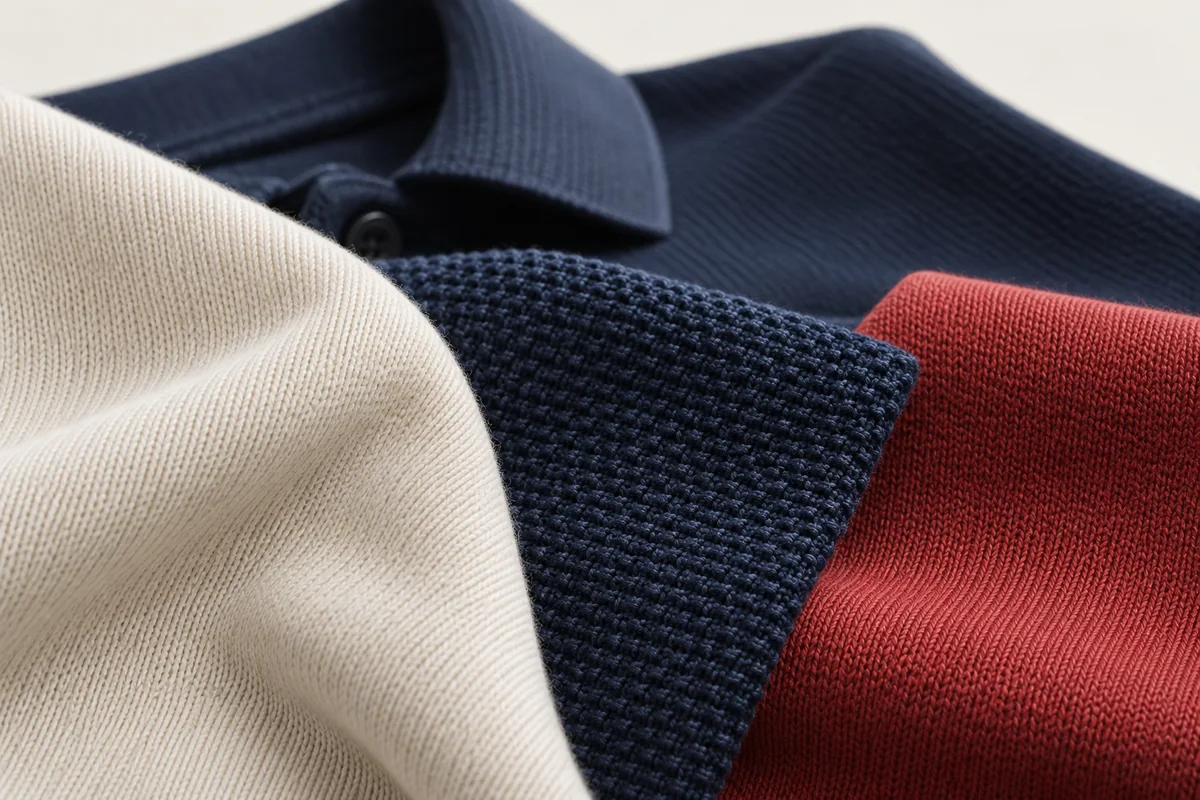
Pure cotton identifies the fibre content; it does not specify whether the fabric is woven shirting, smooth jersey or textured pique. Polyester cotton describes a blend, but the percentages need to be stated. Compare candidates of the same garment type before deciding whether an observed difference comes from fibre content. A lightweight shirt and a dense polo are not a controlled comparison.
Blending can balance different fibre properties. UNIDO's technical discussion identifies moisture sorption, crease behaviour, pilling and dimensional stability among the factors that determine a suitable polyester cotton blend. Cotton's absorbency and polyester's contribution to crease performance help explain why buyers consider the combination. The proportions are only part of the engineering: yarn and finishing choices also matter. Ask for the composition and construction in writing, then compare the garments instead of assigning every blend the same advantages.
Further reading: UNIDO: Cotton Polyester Blends for Producing Garments Used in Tropical Countries ↗
03
Separate absorption, wicking and drying
Cotton absorbs more moisture into its fibres than polyester, but fabric moisture movement depends on more than absorption. A fabric can spread liquid across its surface, retain it, or release it through drying in different ways. Cotton Incorporated's TransDRY explanation is a useful example of engineered cotton moisture management: treatment and yarn arrangement can change behaviour. It should not be read as evidence that an ordinary cotton uniform has that technology.
For an active team, ask which property a performance claim describes and what evidence supports it. AATCC lists separate methods for liquid moisture management, wicking and drying. Avoid accepting one result as proof of all three. Use finished samples in a realistic trial and record where discomfort occurred. The goal is a garment that works through the shift, rather than winning an isolated water-drop demonstration at a sales meeting.
Further reading: CottonWorks: TransDRY Technology ↗ · AATCC: Standard Test Methods and Procedures ↗ · Cotton Incorporated: Textile Fibers ↗
04
Compare care after the same wash routine
A uniform programme includes the work required to keep clothing presentable. Ask whether staff wash at home, use a shared laundry or receive professionally laundered garments. Then check the proposed care instructions against that arrangement. A material that performs well under one routine may be unsuitable if the organisation cannot reliably follow it.
Wash comparable samples using the same agreed routine, following their care instructions, and keep an unwashed reference. Review body length, width, collar shape and visible creasing after drying. AATCC TM135 addresses length and width changes in fabrics under specified home laundering conditions; it also notes that standard procedures do not exactly reproduce every household's practice. For a buying decision, record both the test conditions and the practical observations. Do not assume that a blend percentage guarantees a particular shrinkage or ironing result.
Further reading: AATCC TM135: Dimensional Changes of Fabrics after Home Laundering ↗
05
Judge the appearance at working distance
Corporate uniforms need to look coherent across people and sizes. View candidate colours under the lighting where staff will wear them, then assess the garment from a normal conversation distance. Notice whether light colours reveal underlayers, whether creases catch the light strongly and whether the collar maintains the intended shape. A photograph taken under flattering studio lighting cannot settle these questions.
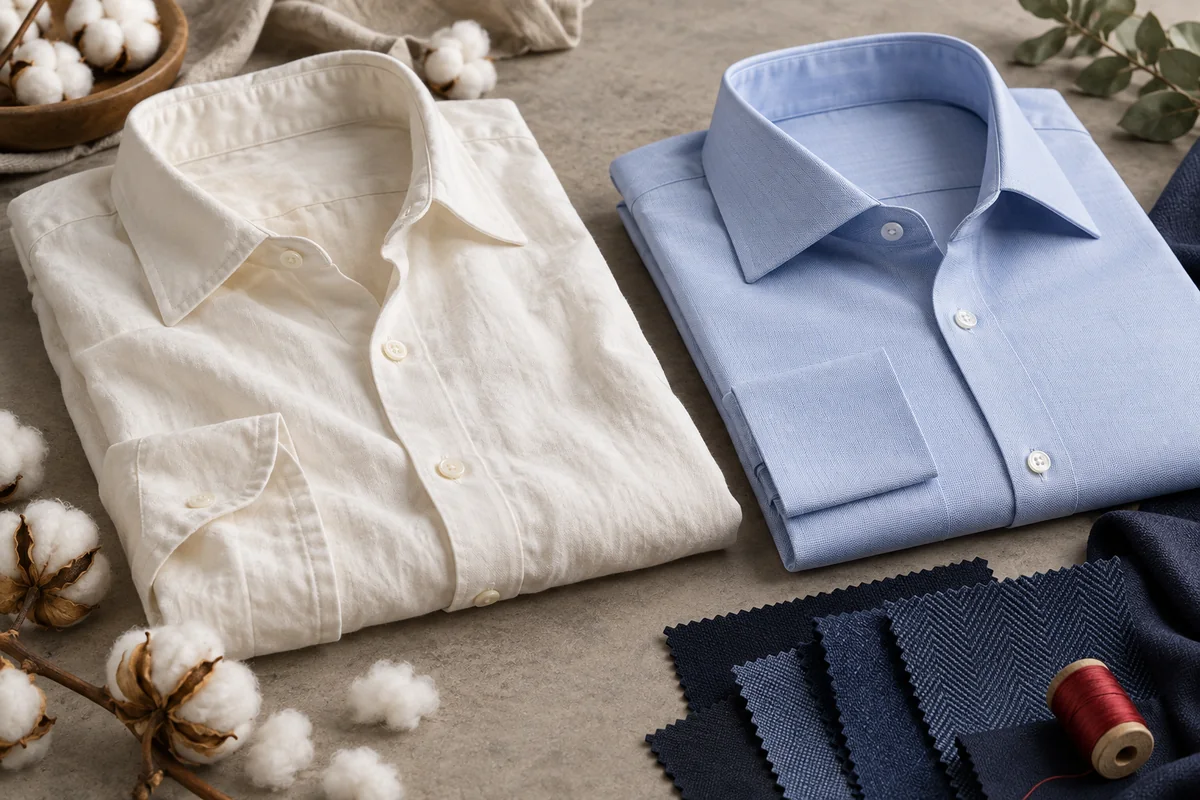
In a hypothetical reception uniform project, one cotton shirt might achieve the preferred matte appearance while a particular blend needs less attention after the agreed laundry routine. That is a comparison between those tested garments, not a rule for every cotton or blended shirt. Ask the decision maker to rank the actual outcomes. Keep the selected colour reference and sample together so that the final approval is based on the complete combination.
06
Test the decoration on the chosen fabric
A logo changes how a uniform looks and sometimes how the decorated area feels. Request a sample using the intended artwork size, position and process on the selected fabric. Inspect fine details, the reverse side, local stiffness and the appearance after care. A logo that looks crisp on a separate patch may behave differently when applied directly to the shirt.
Ask the supplier to recommend a decoration method for the specific material and design. Give them a clean artwork file and state whether small lettering must remain readable. If a proposed solution changes the visual effect, approve the sample rather than relying on a process name. Record the location relative to a defined garment feature, such as the centre front or pocket edge, so that placement can be checked consistently across the size range.
07
Evaluate value over the issue cycle
The quoted unit price is only one part of the decision. Consider the number of garments issued per employee, the expected replacement process and any costs created by difficult care or inconsistent fit. Keep these as planning assumptions until there is evidence from the chosen product. Avoid inventing a service life or cost saving from fibre content alone.
Build a comparison sheet with purchase price, decoration, packing, tested observations and unresolved questions. In a hypothetical office trial, a lower priced sample might lose its appeal if several wearers reject the collar feel; another might justify its price through a preferred fit. A small trial can expose these tradeoffs before a larger commitment. Explain the chosen priorities to staff so that the uniform is evaluated against its intended use rather than an unstated ideal.
- 01Workday
Define climate, movement and presentation needs.
- 02Like for like
Compare equivalent garment types and record composition.
- 03Wear trial
Collect structured comfort and movement feedback.
- 04Care trial
Wash as agreed and compare shape and appearance.
- 05Approval
Select the complete garment and preserve its specification.
08
Write a specification that survives reordering
Once a candidate is approved, capture what was actually selected. Record the fibre percentages, material reference, colour, construction, measurements, artwork and care instructions. Include the sample identification and any agreed performance requirement. This record helps prevent a later substitute from being accepted simply because its label uses the same broad composition description.
When discussing a Sungrace order, compare the relevant formal shirt or polo options with the work brief and request confirmation of the current material details. Product names are a starting point for the conversation, not evidence of a test result. Use the bulk enquiry to share quantities and the conditions employees will encounter. A useful final choice is one that the purchasing team can explain through samples and records, and that employees can assess in the context of their daily work.
Sources and further reading
Technical references used for this guide. Confirm the specification and testing appropriate to your garment and order.