Quality & Testing
Colour Consistency in Uniforms: Dye Lots, Shade Bands and Wash Testing
Learn how physical colour references, shade grouping and meaningful wash checks help teams maintain a consistent uniform appearance.
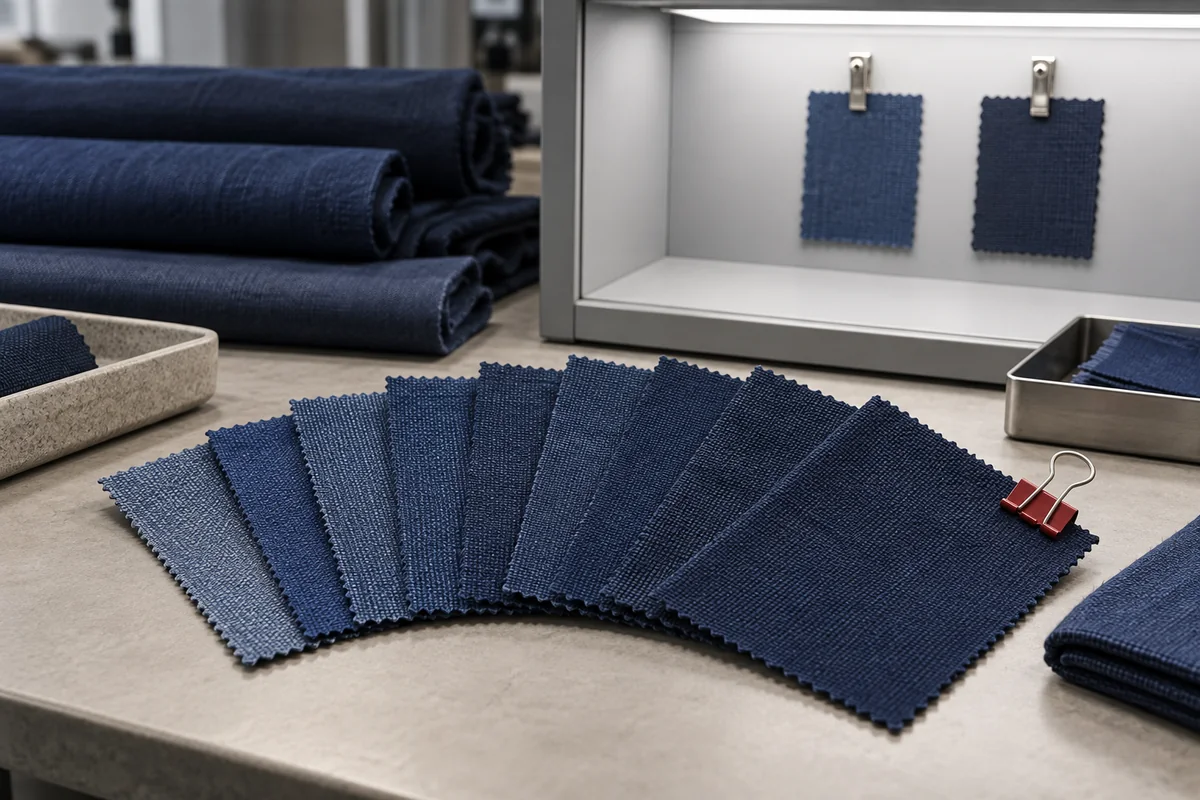
Two garments can both be described as navy and still look different when worn side by side. For a corporate team, that difference may be more noticeable than a small variation in styling. Colour consistency requires a reference that survives the journey from the buyer's brief to fabric selection, garment assembly and later replacement orders.
The useful question is not whether a supplier can repeat a colour name. It is how the chosen shade will be approved, which variation is acceptable and how repeat purchases will be compared. This guide explains dye lots, shade bands and care-related checks in practical purchasing terms, with separate attention to what photographs and laboratory reports can actually establish.
01
Approve a physical colour reference
Begin with a physical swatch or garment in the intended material. Give it an identifier and record who approved it and when. A phone photograph is useful for communication, but it should not become the only reference for a colour-critical decision. Keep the reference protected from unnecessary light, wear and laundering, and retain a separate garment for practical trials.
Ask the supplier how a proposed fabric will be compared with that reference. Datacolor explains that textile colour management involves both measured and visual assessment, with the viewing conditions affecting comparisons. Discuss the environment in which the team will wear the uniform as part of approval. The aim is to establish an agreed appearance, not to argue later over two differently displayed phone images.
Further reading: Datacolor: Colour Management in Textiles ↗
02
Ask what a dye lot means for your order
A dye lot identifies a batch associated with a dyeing production run. It is useful traceability information, but the identifier alone does not tell a buyer whether every visible component matches. Ask whether the order uses one lot or several, whether fabric has been reviewed for shade variation and how components will be kept together during production.
Record the supplier's available batch references in the approval file. If a fabric or process changes, ask for a fresh comparison rather than assuming that the old colour name carries the same appearance. Datacolor's textile formulation guidance identifies substrate and process variations among the factors affecting colour. A purchasing team can respond to that complexity by preserving references and requiring explicit approval of a changed supply.
Further reading: Datacolor: Textile Colour Formulation and Correction ↗
03
Use a shade band to discuss acceptable variation
A shade band is a practical group of physical samples showing the colour range being considered for acceptance. Ask the supplier to identify the proposed target and any samples at the limits of the offered range. Label decisions clearly: approved, rejected or awaiting review. The label should refer to a specific sample, not a vague description such as slightly darker blue.
Consider where the garments will appear together. A group standing at one reception desk may need closer visual agreement than garments issued across separate locations. That is a buyer preference to discuss, not an excuse for unapproved variation. If different acceptable groups are supplied, request an allocation plan that keeps the team's intended appearance coherent and allows replacements to be traced to the appropriate group.
04
Review colour under agreed lighting
Metamerism occurs when samples appear to match under one light source but differ under another. Datacolor highlights this as a textile colour-management concern. For a uniform brief, discuss both a controlled comparison condition and any relevant working environment, such as daylight near a showroom entrance or the lighting used in an office. A single quick glance may leave that difference undiscovered.
Keep the comparison arrangement consistent. Place samples together in the same orientation and avoid judging one against a strongly coloured background while another sits elsewhere. Record which comparisons were approved and who made the decision. If an instrumental colour tolerance is proposed, ask the supplier or laboratory to specify the measurement method and conditions; a bare numerical threshold is insufficient context for a purchasing decision.
Further reading: Datacolor: Colour Management in Textiles ↗
05
Check the complete garment, including trims
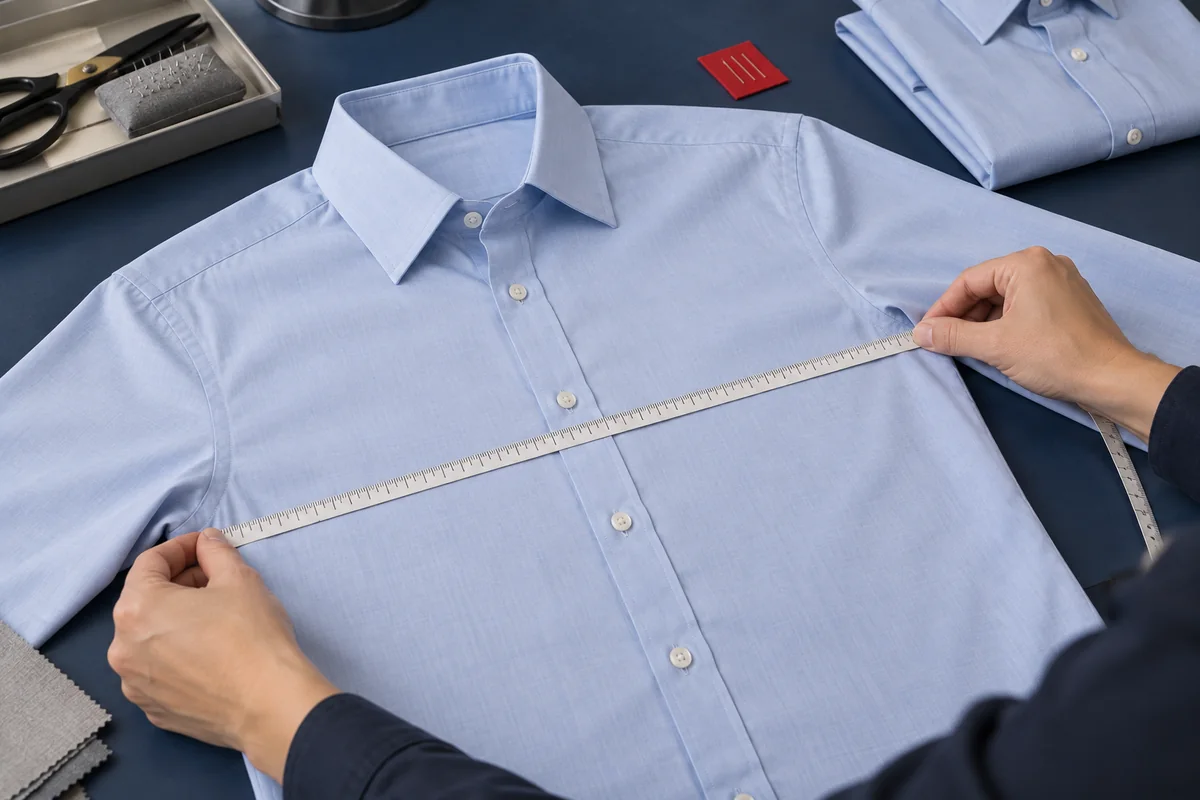
A uniform is viewed as a whole. Examine sleeves, body panels, collar, cuffs and any contrasting elements together on a completed sample. Compare left and right components and open the garment where a fold might hide a difference. Ask how any shade grouping is maintained through cutting and assembly so an approved fabric selection results in a coherent finished product.
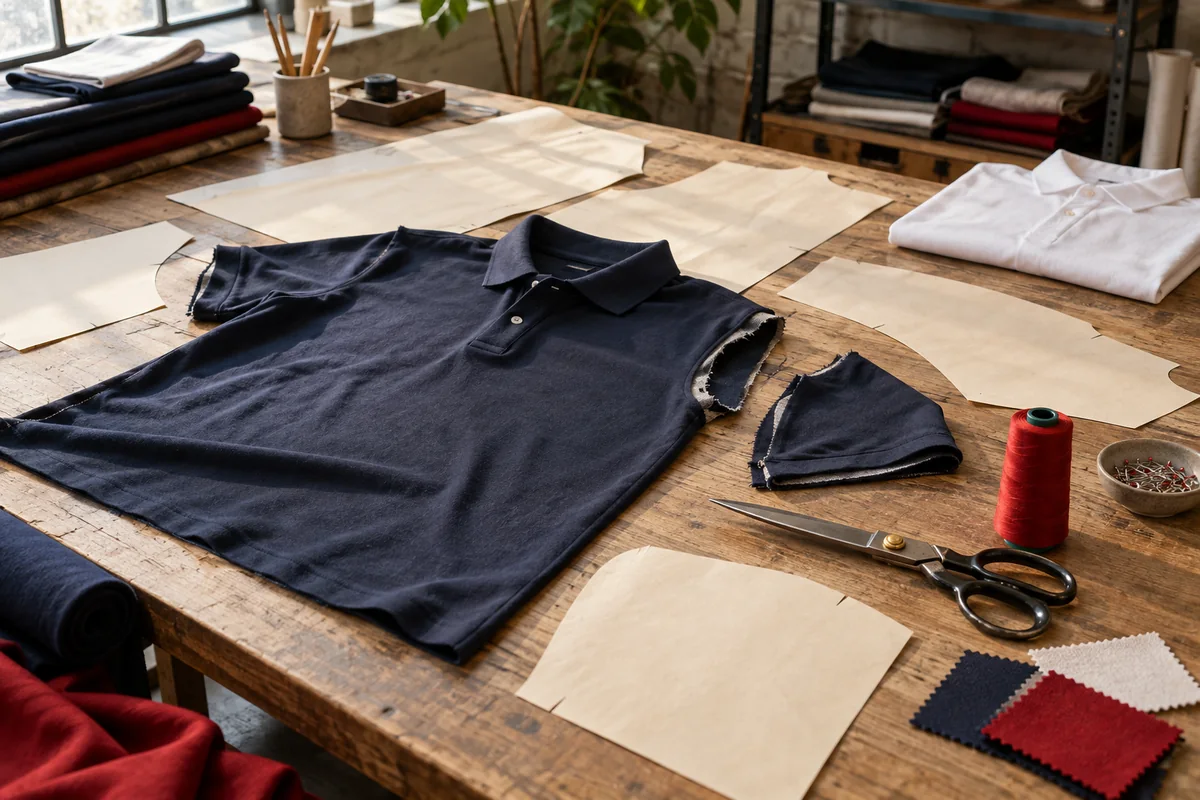
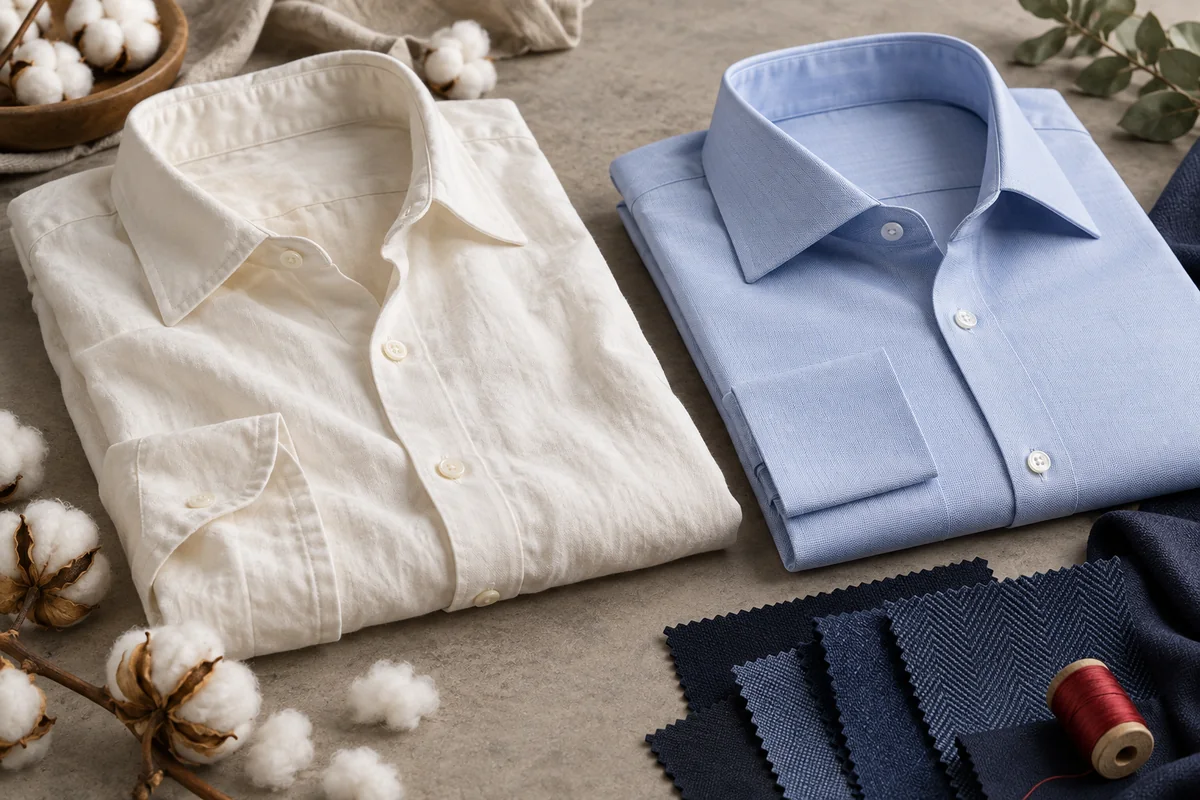
Branding also needs a separate visual approval against the chosen base. A thread or print colour that worked on a pale shirt may appear different on a dark polo. Judge the complete combination rather than approving fabric and logo in isolation. For a coordinated seasonal wardrobe, review the shirt, polo and sweater together, while recognising that distinct materials may have different surface appearances.
06
Separate initial matching from colourfastness
An initial colour match answers how garments look at approval. Colourfastness asks how the material responds to specified exposures. AATCC lists different tests for laundering, rubbing, perspiration and light; one result does not cover all of them. Select the properties relevant to the uniform's use and agree what evidence is needed before production, rather than asking for an undefined colour guarantee.
For laundering, AATCC TM61 provides accelerated colourfastness procedures. A report should identify the selected procedure and the sample tested. AATCC also explains that standard laundering materials improve consistency and that optical brighteners can affect colour evaluation. Your own wash trial can still provide useful practical observations, but record its detergent, washing and drying conditions and avoid treating it as equivalent to a laboratory method.
Further reading: AATCC: Colourfastness Test Method Overview ↗ · AATCC TM61: Colourfastness to Laundering ↗ · AATCC: Standardised Laundering for Textile Testing ↗
- 01Set target
Retain an identified physical colour reference.
- 02Review shade
Approve proposed lots and acceptable sample range.
- 03Check garment
Compare panels, trims and branding together.
- 04Assess care
Use agreed wash trials or relevant laboratory tests.
- 05Preserve record
Keep references and batch details for replenishment.
07
Plan replacements before the first issue
A hypothetical North Indian service business might issue navy polos in April and request additional garments for new staff several months later. The new garments should be compared with a retained original reference. Comparing only against heavily worn uniforms could confuse production shade variation with changes from use and laundering. If the new supply differs, review that difference before distributing it across one visible team.
Ask about availability of the selected product and colour when placing the first order, while recognising that future supply cannot be assumed. Record whether a later batch needs a new sample approval. Consider a measured reserve based on actual staff turnover and size demand, rather than buying a large buffer without evidence. Keep the reserve identified and protected so it remains useful.
08
Write a colour brief the supplier can act on
Your enquiry should name the garment, colour reference, quantity by size and which items will be worn together. Add the required delivery date, branding plan and any colourfastness evidence your organisation needs. State how physical shade approval will be completed and who can accept a proposed variation. This makes colour a manageable approval step instead of an undefined expectation.
Sungrace's bulk enquiry page is the appropriate starting point for discussing a coordinated order from its Jalandhar clothing business. Share the intended combination of corporate shirts, polos or acrylic sweaters and the reference you want to match. Preserve the final agreement with the sample record so future orders begin from an identifiable decision.
Sources and further reading
Technical references used for this guide. Confirm the specification and testing appropriate to your garment and order.