Uniform Buying Guides
Small-Batch Corporate Uniform Planning for North Indian Businesses
Plan size quantities, branding approvals, delivery milestones and repeat orders without turning a small uniform purchase into a complicated project.
A small uniform order can involve almost as many decisions as a large one. A business with twelve employees still needs the right sizes, an approved logo, a delivery plan and a way to dress the next person who joins. The challenge is coordinating those decisions without creating unnecessary stock or a chain of last-minute changes.
For offices, service teams and customer-facing businesses across North India, a simple written plan can make purchasing more predictable. The approach below treats the first order and later replenishment as connected work. It is suitable for discussing an enquiry with Sungrace in Jalandhar, while keeping lead times, availability and sample arrangements subject to the actual order.
01
Define the wardrobe by role and occasion
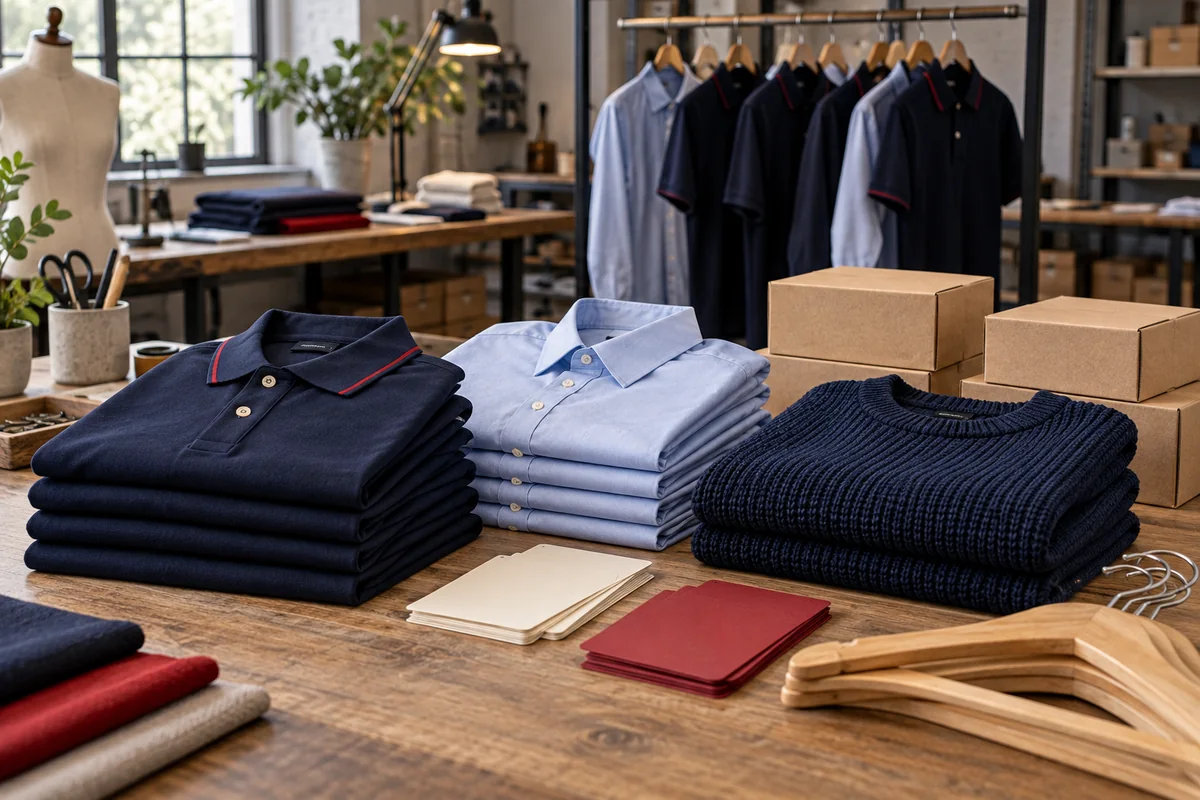
List the roles that need clothing and the situations in which it will be worn. Separate everyday uniform requirements from an event-only garment or an optional seasonal layer. A formal shirt, polo and sweater need not be issued identically to every employee. Ask managers which combinations employees will actually use before creating the quantity sheet.
Create a short style list with one clear description for each approved item. Limit unnecessary alternatives that divide a small order across many colours and designs. If different departments need different clothing, identify the operational reason and the visual relationship between them. This turns a broad request for corporate uniforms into a product brief that the supplier can price and discuss without making assumptions about your workforce.
02
Build the size matrix from confirmed information
Collect sizes against the selected product's size guidance and, where available, an agreed fitting sample. Do not assume an employee's usual retail size transfers unchanged between styles. Track product, colour, size and quantity as separate fields, then reconcile the totals against the number of garments being issued to each person.
GS1's apparel guidance treats colour and size as structured product attributes that help keep product data consistent. A small business can apply that organisational principle in a simple spreadsheet without implementing a complex retail system. Give every product-colour-size combination an unambiguous internal description. Preserve the approved matrix as a dated version, and ask employees to report size corrections before the order is released for production.
Further reading: GS1 US: Clothing Colour and Size Codes ↗
03
Understand minimums at the product and colour level
Sungrace's minimum order is two units per product and colour. Apply that rule to the actual combinations you intend to buy, rather than looking only at the overall order total. A small team choosing several products and many colours can create more separate decisions than a larger team using one coordinated style. Confirm the proposed mix through the bulk enquiry page.
Build the budget from garment quantities and the selected branding locations, then request the complete quotation for the order. Include delivery arrangements and any other quoted charges when comparing options. Avoid treating the lowest unit price as the entire decision: an unsuitable size, unclear artwork or an unnecessary colour variant can create extra purchasing work even when the initial quantity is small.
04
Put approvals in a sensible sequence
Choose the garment and colour first, confirm the size allocation, then finalise decoration on that base. Give the supplier a current logo master, finished dimensions and a placement reference. Ask which sample or proof can be provided and what must be approved before production begins. Keep the agreed approval record accessible to the person who will later receive the garments.
For Sungrace, chest embroidery or DTF is ₹50 each and back embroidery or DTF is ₹100 each. Sleeves are ₹50 for embroidery only on polos and tees. Corporate sweaters are 100% acrylic and embroidery only. Select the applicable option for each garment and record it beside the quantity matrix. A separate line for each placement helps prevent a chest-only approval from being interpreted as an instruction for additional branding.
05
Work backwards from the date employees need clothing
Distinguish the date of dispatch, the date of delivery and the date uniforms must be ready for issue. Tell the supplier which deadline matters and why. Ask for the proposed approval, production and dispatch milestones for the actual product mix. Do not build a team launch around an assumed standard lead time that nobody has confirmed.
Allow a practical interval for receipt checking and distribution. Decide who will respond if a sample needs revision or a size is unavailable. A hypothetical Chandigarh office preparing for a client event might assign one coordinator to approve artwork and another to confirm staff sizes, with one final decision owner. That arrangement can prevent conflicting messages while still letting the relevant colleagues check their own information.
- 01Confirm demand
Agree roles, garments and size quantities.
- 02Approve sample
Finalise colour, fit and decoration version.
- 03Release order
Confirm quotation and production milestones.
- 04Receive and issue
Check the size mix and allocate garments.
- 05Replenish
Use the retained specification and actual demand.
06
Release one complete instruction set
When decisions are complete, send one consolidated order record. Include product routes or exact names, colours, quantities by size, branding files, approval references, required delivery address and contact details. State which earlier version it replaces. Ask the supplier to confirm any unresolved item explicitly so a blank field cannot silently become a production assumption.
After release, log changes with a date and an authorised decision. Ask how a late alteration affects cost, availability and the agreed schedule before accepting it. For example, adding a new logo location is a production change even if the garment count remains constant. Maintain a short open-items list during the order, and close each item with a specific answer rather than scattered acknowledgements across several conversations.
07
Receive, check and issue against the matrix
At delivery, count the garments by product, colour and size before distributing them. Compare labels and decoration with the approved reference, and set aside any item that needs review. Record shortages, incorrect allocations and quality concerns separately. That separation helps the supplier understand whether the next action is supplying a missing size, correcting a garment or resolving a packing error.
Use an issue record showing the garments handed to each employee and the date. Keep unused units identified by their product and size rather than mixing them in an unlabelled cupboard. For multiple offices, prepare location allocations before dispatch or distribution. A clear handover prevents a correct total delivery from becoming an apparent shortage when one branch has received garments intended for another.
08
Treat repeat orders as controlled updates
Keep a repeat-order folder containing the approved garment reference, artwork version, size matrix and supplier correspondence. Record actual requests from new starters and replacements over time. Use that evidence to decide whether a small reserve is useful and which sizes it should contain. Avoid a standard percentage buffer that has no relationship to your team's needs.
Before reordering, reconfirm product availability, colour and any changed requirements. Compare a new supply against the retained approval reference if the material or shade differs. Send Sungrace a bulk enquiry identifying the previous specification and the new quantity breakdown. Repeat purchasing becomes easier when the supplier receives a clear update to an established brief and the business can explain exactly what it wants to retain.
Sources and further reading
Technical references used for this guide. Confirm the specification and testing appropriate to your garment and order.